San Joaquin County Dog Registration Information
Service Dogs and Emotional Support Animals in San Joaquin, California
If you’re searching “where do I register my dog in San Joaquin County, California for my service dog or emotional support dog,” the key thing to know is that most residents are actually looking for a dog license in San Joaquin County, California (a local permit tied to rabies vaccination), not a special “service dog registry” or “ESA registry.” Dog licensing is handled through official local animal services or city animal control offices, and rules can differ depending on whether you live in an incorporated city (like Stockton or Tracy) or the unincorporated area of San Joaquin County.
Where to Register or License Your Dog in San Joaquin County, California
The offices below are the most relevant official agencies for animal control dog license San Joaquin County, California questions and dog licensing support. Which one you should use depends on where you live (city limits vs. unincorporated county areas) and what you need (licensing, rabies control questions, lost/found, etc.).
San Joaquin County Sheriff’s Office — Animal Services Division (Unincorporated San Joaquin County Dog Licensing)
Notes: This office administers dog licensing for the unincorporated area of San Joaquin County and supports rabies-control related questions. The county does not operate a shelter and contracts for sheltering services.
City of Stockton — Animal Services Division / Animal Shelter (City Services & Shelter Location Used for County Contract Sheltering)
Notes: This is the City of Stockton’s animal services location and the shelter facility referenced for sheltering services connected to county animal services contracts. Specific public counter hours and email were not verified from an official City of Stockton page in the sources reviewed, so contact by phone to confirm current hours and services for your situation.
Overview of Dog Licensing in San Joaquin County, California
What “registering your dog” usually means locally
In San Joaquin County, “registering a dog” typically means obtaining a dog license. A dog license is a local permit that helps animal services identify ownership and verify that dogs have current rabies vaccination coverage. Licensing is often described as similar to registering a vehicle: it creates an official record tied to your address and your dog’s rabies vaccination status.
Who requires a license and where the rule applies
In the unincorporated area of San Joaquin County, dog licensing is required by county ordinance for dogs over a certain age. Incorporated cities (like Stockton, Tracy, Manteca, Lodi, Ripon, Escalon, and others) may have their own local rules and license issuers.
- Unincorporated San Joaquin County: licensing is handled through the San Joaquin County Sheriff’s Office Animal Services Division.
- Inside a city: you may need to follow that city’s process (city animal services, police department animal services unit, or contracted animal control).
What You Need Before Registering a Dog
Common documents and details
While exact requirements can vary by jurisdiction and by your dog’s status, most licensing programs in California require documentation to confirm rabies vaccination and basic ownership details.
- Current rabies vaccination certificate from a licensed veterinarian (often required for licensing)
- Spay/neuter certificate (if applicable; may reduce the license fee)
- Your identification and contact information (name, phone number)
- Dog description (breed/type, color, sex, age)
- Address details (residence address; sometimes mailing address if different)
Rabies vaccination is the core requirement
A key reason local agencies require a license is to verify rabies vaccination status for public health. Many licensing instructions also note that rabies vaccination timing may differ depending on your dog’s age at vaccination (for example, younger dogs may need a follow-up vaccine in one year, while adult dogs can often be vaccinated on a three-year schedule depending on the vaccine and veterinary guidance).
Steps to Register or License a Dog in San Joaquin County, California
Step 1: Confirm your jurisdiction (city vs. unincorporated)
Before you apply, confirm whether your home address is within an incorporated city or in the unincorporated county area. This matters because a city may have its own dog licensing requirements and where-to-apply rules.
- If you live in an unincorporated area, start with the San Joaquin County Sheriff’s Office — Animal Services Division.
- If you live in Stockton city limits, start with City of Stockton Animal Services for city processes and local shelter-related services.
Step 2: Gather required documents
Have your rabies vaccination certificate ready. If your dog is spayed or neutered and you want a reduced fee (when available), gather your spay/neuter documentation as well.
Step 3: Apply in person or by mail (where available)
For unincorporated San Joaquin County, licensing information provided by the county indicates you may be able to license by visiting the Animal Services office or by mailing an application with copies of required documents and payment. If you choose mail, do not send originals unless the office explicitly requests them.
Step 4: Keep your license current
Licenses are commonly issued annually. Renew on time to avoid late penalties and to ensure your dog’s rabies and ownership information stays current in the agency’s records.
Service Dog Laws in San Joaquin County, California
Service dog status is not the same thing as a dog license
A service dog is generally a dog that is trained to do work or perform tasks for a person with a disability. This legal status is separate from local dog licensing. Even if your dog is a service dog, you may still need a dog license in San Joaquin County, California (or in your city) because licensing is about rabies control and local permitting, not disability law.
No universal “official registry” requirement
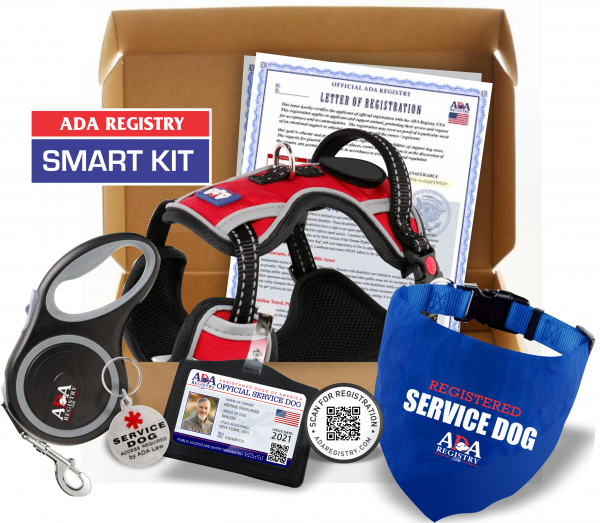
You may see the word “registration” used online, but legally, service dog access rights are not based on being listed in a single national database. In everyday local terms, what you can (and often must) do is license your dog through the correct local agency, and separately ensure your dog meets the legal definition and behavior expectations of a service animal in public settings.
Emotional Support Animal Rules in San Joaquin County, California
ESA status differs from service dog status
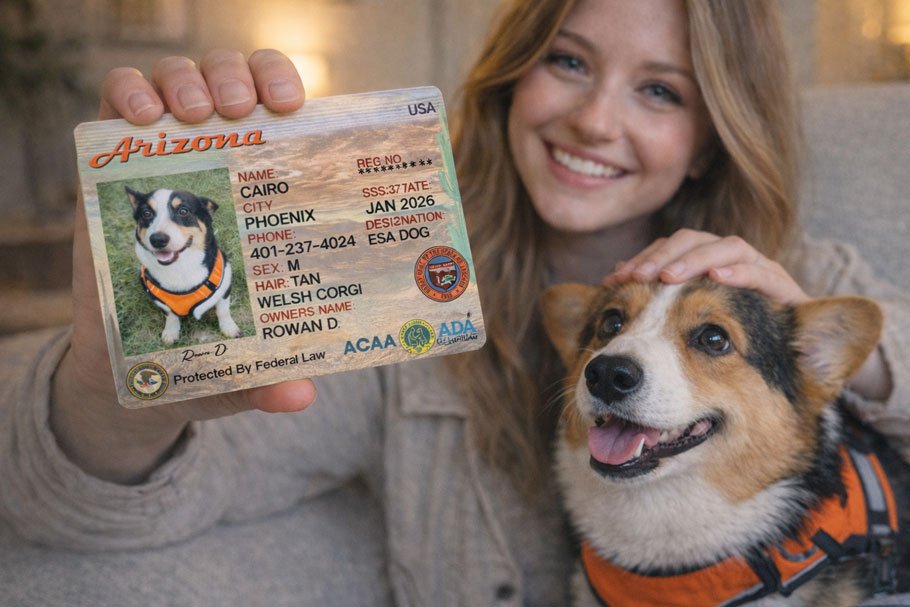
An emotional support animal (ESA) is not the same as a service dog. ESAs generally provide comfort by their presence and may be supported by documentation from a licensed healthcare professional, commonly for certain housing-related accommodations. ESAs are typically not granted the same broad public-access rights as service dogs.
ESA “registration” vs. local licensing
Whether your dog is a pet, an ESA, or a service dog, local governments may still require licensing. If you’re asking where to register a dog in San Joaquin County, California because you have an ESA, the practical step is usually the same: license your dog with the correct city or county office and keep rabies vaccination documentation current.
Dog License vs. Service Dog vs. Emotional Support Animal (Comparison)
| Category | Dog License | Service Dog | Emotional Support Animal (ESA) |
|---|---|---|---|
| What it is | A local permit/record for keeping a dog in a jurisdiction (often tied to rabies control and identification). | A dog trained to perform disability-related work or tasks for a person with a disability. | An animal that provides emotional support; commonly supported by healthcare documentation for certain accommodations (often housing-related). |
| Who issues it | County animal services or city animal services/animal control (depends on your address). | No single government office “issues” service dog status as a license; status is based on meeting the legal definition and training/behavior standards. | No single universal government registry; status is typically tied to documentation from a licensed healthcare professional (for applicable accommodations). |
| Typical proof | Rabies vaccination certificate; owner and dog information; spay/neuter documentation (if applicable). | Evidence of training and the dog’s ability to perform tasks; behavior suitable for public access. | A letter/documentation from a licensed healthcare professional (when needed for an accommodation). |
| Primary purpose | Public health (rabies control), identification, and local compliance. | Assistance with disability-related needs through trained tasks. | Emotional support/comfort and potential eligibility for certain accommodations. |
| Does it replace dog licensing? | Not applicable. | No. A service dog may still need a local dog license. | No. An ESA may still need a local dog license. |
Tip: If you’re trying to comply with local rules and also document service dog or ESA status for a specific setting (housing, work, school, travel), treat these as separate tracks: (1) local dog licensing and rabies requirements and (2) the legal standards and documentation applicable to service animals or ESAs in that context.
Frequently Asked Questions
Do I need a dog license in San Joaquin County, California if my dog is a service dog?
Often, yes. Service dog status does not automatically replace local dog licensing requirements. Licensing is generally tied to rabies control, identification, and local ordinances. Confirm the requirement with the appropriate office for your address (city vs. unincorporated county).
Do I need a special service dog registration from the county?
Typically, no. Counties commonly handle dog licensing requirements San Joaquin County, California (rabies/permit requirements) but do not operate a universal registry that “certifies” service dogs. If you are being asked for “registration,” clarify whether the requester means a local dog license or documentation for a particular accommodation.
Where do I register a dog in San Joaquin County, California if I live in a city?
Many cities manage their own animal services programs and dog licensing processes. If you live within city limits, start with your city’s animal services/animal control office. If you’re unsure which jurisdiction applies, call the county Animal Services Division and ask which office should handle licensing for your address.
What is usually required to get a dog license?
The most common requirement is proof of current rabies vaccination. You may also need:
- Your contact information and address
- Your dog’s description (breed/type, color, sex, age)
- Spay/neuter documentation (if applicable)
- Payment for the licensing fee
If I just moved to San Joaquin County, do I have to re-license right away?
Some jurisdictions recognize an existing current license from another city or county for a limited time, while others require you to obtain a local license after establishing residency. Because rules can differ depending on whether you live in an incorporated city or the unincorporated area, contact the appropriate office above to confirm what applies to your move-in situation.
Register A Dog In Other California Counties
Select your county below to get started with your dog’s ID card. Requirements and license designs may vary by county, so choose your location to see the correct options and complete your pup’s registration.
- Alameda County Dog Registration
- Alpine County Dog Registration
- Amador County Dog Registration
- Butte County Dog Registration
- Calaveras County Dog Registration
- Colusa County Dog Registration
- Contra Costa County Dog Registration
- Del Norte County Dog Registration
- El Dorado County Dog Registration
- Glenn County Dog Registration
- Humboldt County Dog Registration
- Imperial County Dog Registration
- Inyo County Dog Registration
- Kern County Dog Registration
- Kings County Dog Registration
- Lake County Dog Registration
- Lassen County Dog Registration
- Madera County Dog Registration
- Marin County Dog Registration
- Mariposa County Dog Registration
- Mendocino County Dog Registration
- Merced County Dog Registration
- Modoc County Dog Registration
- Mono County Dog Registration
- Monterey County Dog Registration
- Napa County Dog Registration
- Nevada County Dog Registration
- Orange County Dog Registration
- Placer County Dog Registration
- Plumas County Dog Registration
- San Benito County Dog Registration
- San Bernardino County Dog Registration
- San Luis Obispo County Dog Registration
- San Mateo County Dog Registration
- Santa Barbara County Dog Registration
- Santa Clara County Dog Registration
- Santa Cruz County Dog Registration
- Shasta County Dog Registration
- Sierra County Dog Registration
- Siskiyou County Dog Registration
- Solano County Dog Registration
- Sonoma County Dog Registration
- Stanislaus County Dog Registration
- Sutter County Dog Registration
- Tehama County Dog Registration
- Trinity County Dog Registration
- Tulare County Dog Registration
- Tuolumne County Dog Registration
- Ventura County Dog Registration
- Yolo County Dog Registration
- Yuba County Dog Registration